


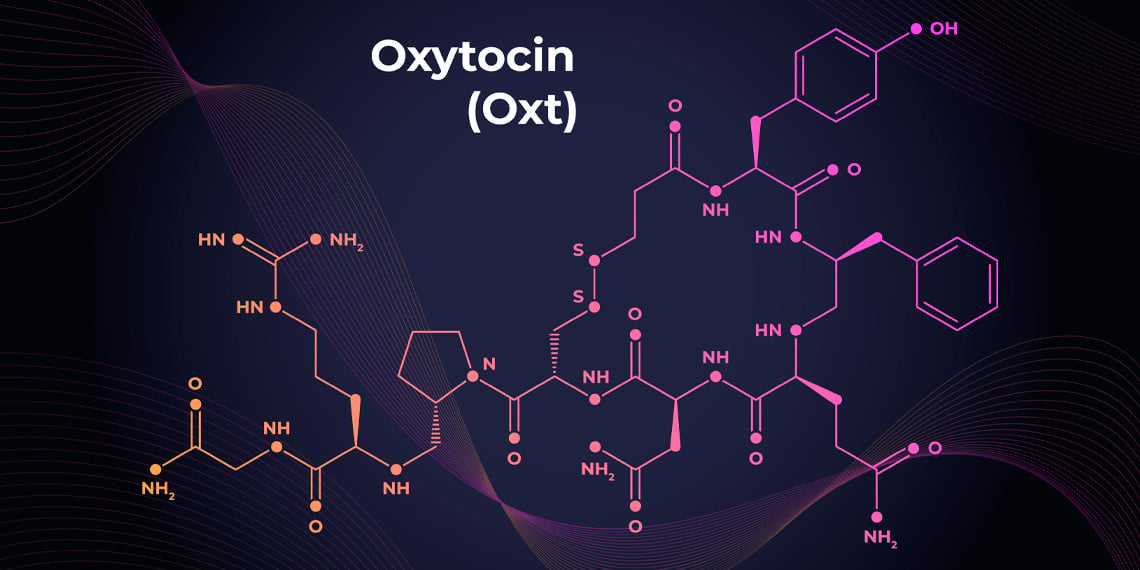
Oxytocin alters how the brain learns and recalls information about social hierarchies, boosting neural activity linked to learning rank relationships and improving memory for networks that do not involve the observer. The findings, reported in a recent PNAS study, illuminate the brain mechanisms that help people navigate social environments.
The study situates social dominance as a force shaping access to resources, mating opportunities and influence, a feature observed across many species. To operate effectively in such environments, individuals must monitor their own status and the relationships among others, with different brain regions engaged when considering one’s own position versus evaluating others from a third-person perspective.
While prior work largely examined simple, linear hierarchies, real-world social networks feature equal ranks and branching connections. The researchers therefore sought to understand how the brain learns and represents more intricate social structures.
The research team—Jiawei Liu and Chen Qu of South China Normal University, with collaborators in China and France—focused on oxytocin, a hormone known to influence social memory and dominance behaviours in animals, and investigated whether it alters how humans learn and remember social ranks.
The experiment recruited 60 healthy young men, with two later excluded for insufficient performance, leaving 58 for analysis. To avoid gender-based variation in hormone responses and attitudes toward the male faces used in the tasks, only men took part. Participants were randomly assigned to receive either an oxytocin nasal spray or a placebo spray with no active ingredients.
Participants played a computer game in which they learned the ranks of individuals in two fictional corporate departments. One department placed the participant in a self-oriented network, the other centered on a stranger, constituting an other-oriented network.
During the training phase, participants viewed pairs of faces and guessed whether one was superior or if the two were of equal rank, receiving immediate feedback to deduce the hidden social structure by trial and error.
Over time, accuracy improved with training. Participants tended to learn the ranks within their own department faster than in the stranger’s department, and relationships among high- and low-status individuals were learned more quickly than those involving intermediate status.
Using mathematical modelling, the researchers tracked the learning process and tested several models. The data best fit a hybrid model, suggesting two interacting mental processes underpin social network learning.
First, participants tracked the likelihood that any two people belonged to an “equal” rank category based on direct feedback. Second, they assigned a hidden rank value to each person that drifted apart for unequal pairs and moved closer for equal pairs. The combination of these processes allows a coherent hierarchical representation to emerge even without viewing the entire network at once.
Functional MRI measured brain activity during the training. When participants chose the correct rank relationship, the ventromedial prefrontal cortex and the posterior cingulate cortex showed heightened activity, regions associated with processing social information and reward.
Those who received oxytocin exhibited stronger activity in these areas compared with the placebo group, suggesting the hormone amplifies the neural signals involved in mapping social networks.
In the subsequent test phase, which assessed transitive inference—inferring relationships between items not explicitly linked—participants faced face pairs never shown together during training and had to deduce the rank relationship from prior learning. No feedback was provided in this phase.
Oxytocin influenced performance in this phase, but the effect depended on the network being considered. The hormone improved accuracy when participants inferred relationships within the stranger’s department but did not enhance performance for the participant’s own department.
Brain imaging during the test phase revealed additional network-specific differences. The dorsal anterior cingulate cortex was more active when participants made inferences about the stranger’s network, a region implicated in weighing options for others in social contexts.
Moreover, the amygdala and the parahippocampal region—temporal lobe structures involved in emotion and memory—responded differently under oxytocin. In the oxytocin group, these memory-related areas reacted more strongly when retrieving information about the stranger’s network than about the participant’s own network.
The researchers suggest that oxytocin shifts social memory away from self-centered recall and toward information relevant to others, aligning with prior findings that the hormone can promote prosocial behaviours and alter the brain’s valuation of others.
Several limitations accompany the study. The participant pool consisted solely of healthy men, so the results may not generalise to women, where hormonal effects can differ. The experimental design used male faces, which could influence how ranks are perceived. Additionally, the study administered oxytocin nasally; while evidence suggests central effects, some behavioural changes may arise from peripheral influences outside the brain.
Future work will need to disentangle how central and peripheral oxytocin systems interact during social learning and to test how these mechanisms operate across different demographic groups and real-world social settings.
The study, authored by Jiawei Liu, Chen Qu, Rémi Philippe, Siying Li, Edmund Derrington and Jean-Claude Dreher, is titled “Oxytocin modulates the neurocomputational mechanisms engaged in learning rank relationships in social networks.”
