


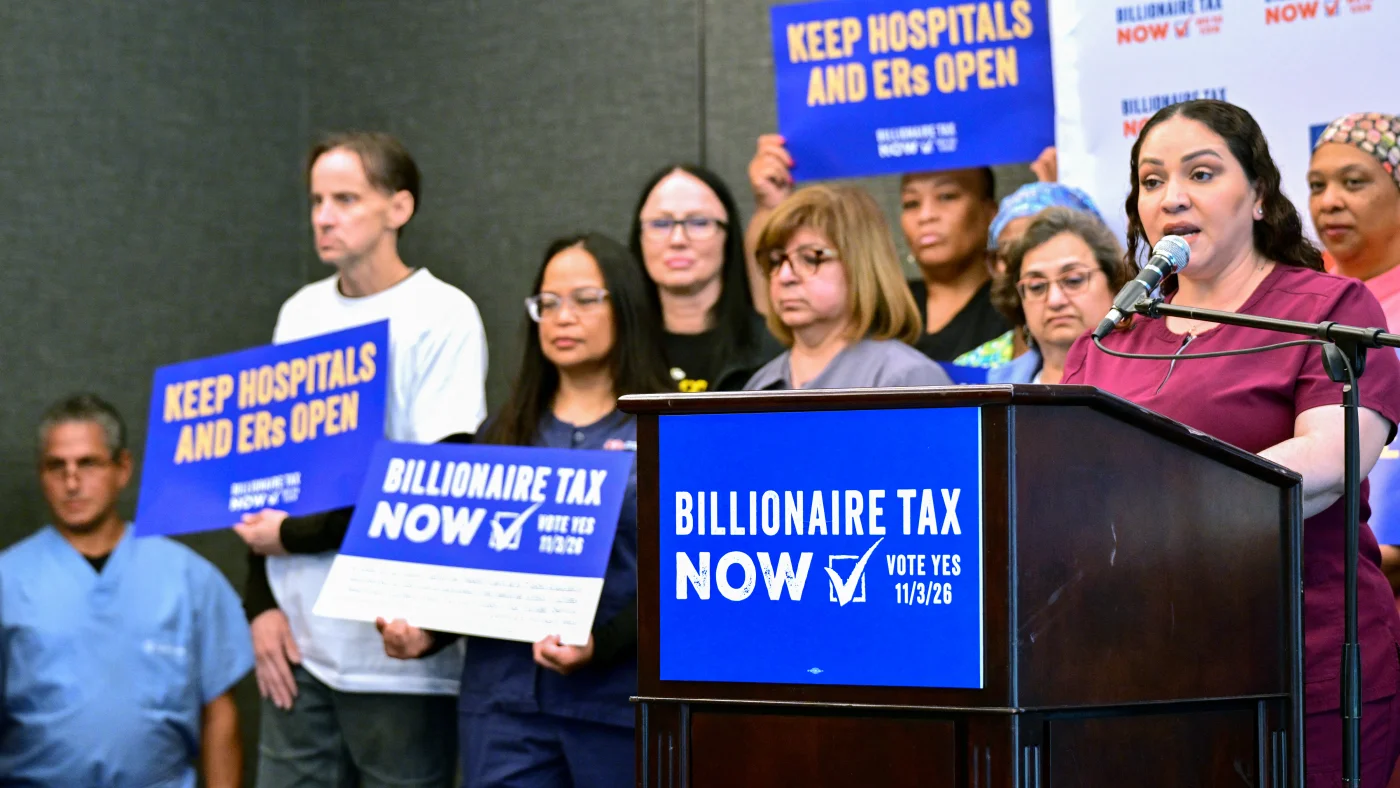
California voters have rejected Proposition 40, a proposed one-off wealth tax on the state’s billionaires, despite a strong Democratic performance in the midterm elections. The result has prompted a fresh debate over whether the defeat was caused by heavy opposition spending, scepticism about wealth taxes, or the design of the measure itself.
Proposition 40 would have imposed a one-time 5 per cent tax on California billionaires. Its defeat has set two economists, Gabriel Zucman of the University of California, Berkeley, and Joshua Rauh of Stanford University, at odds over what the result means for the future of wealth-tax proposals in the Democratic Party.
Was billionaire spending decisive?
Mr Zucman, a leading supporter of wealth taxes, said the outcome was unsurprising after opponents spent almost $400 million campaigning against Proposition 40, including on competing ballot measures.
“The money spent by the billionaires was critical,” he said, arguing that Californians had been exposed to an overwhelming volume of advertising during the campaign.
Mr Zucman said the spending imbalance was particularly important. More than $300 million was spent on advertisements opposing the measure, while spending on the other side was negligible, he said.
That differed from several closely fought candidate races, where both sides spent heavily. In Texas, Elon Musk spent more than $150 million trying to defeat the Democrat James Talarico, who nevertheless won his Senate race comfortably.
Mr Zucman argued that ballot initiatives were especially vulnerable to well-funded campaigns because voters could be unfamiliar with the technical details of a proposed policy. Candidate races, by contrast, offer party labels and name recognition as simpler guides for voters.
Proposition 40 also lacked a clear partisan signal. Prominent Democrats, including California Governor Gavin Newsom, opposed it. Mr Newsom said he supported a national minimum tax on billionaires instead.
California voters and the wealth-tax question
Mr Rauh, a prominent critic of the proposal, questioned whether advertising alone could explain its poor performance. He compared support for Proposition 40 with the vote for Kamala Harris in the 2024 presidential election and found a particularly large gap in some of the most progressive Bay Area counties.
He argued that voters in those areas were more likely to know a billionaire, work for one or have seen one move to Texas or Florida. Their proximity to wealthy individuals and the businesses they supported, he suggested, may have made them more sceptical of the tax.
“The electorate even in progressive California has shown that it isn’t ready for a wealth tax,” Mr Rauh said.
The result may reflect opposition to the specific structure of Proposition 40 rather than to wealth taxes in general. The measure was a one-off state tax, with 90 per cent of the projected revenue earmarked for healthcare and 10 per cent for food assistance and education-related programmes.
That distribution alienated some traditional Democratic allies, including the California Teachers Association. The teachers’ union said the proposal shortchanged public schools and would not provide sustainable, long-term funding for schools and communities.
Critics also argued that a state-level tax would be easier for wealthy people to avoid than a national measure. Mr Newsom said: “Wealth is movable, and it shops for the state with the lowest taxes. The fight belongs at the federal level, where this broken system was created in the first place.”
What the defeat means for wealth-tax proposals
Mr Zucman believes the movement for a billionaire tax will continue despite the California result. He said the strong Democratic performance nationally would put the issue at the centre of debate in Congress, with newly elected Democratic senators having campaigned on limiting the power and influence of billionaires.
Mr Rauh also expects further wealth-tax proposals, but believes President Donald Trump’s presence in the White House makes it unlikely that one will become law soon. He said the 2028 election would provide a clearer test of public support if wealth taxation became a prominent campaign issue.
Even if supporters win that political argument, they could face a legal challenge. Mr Rauh argues that a federal wealth tax could be classed as a “direct tax”, exposing it to constitutional restrictions.
The 16th Amendment exempted income taxes from those restrictions, but does not specifically mention wealth taxes. Legal scholars disagree over whether a wealth tax would fall within the constitutional definition, leaving the issue unresolved.
