


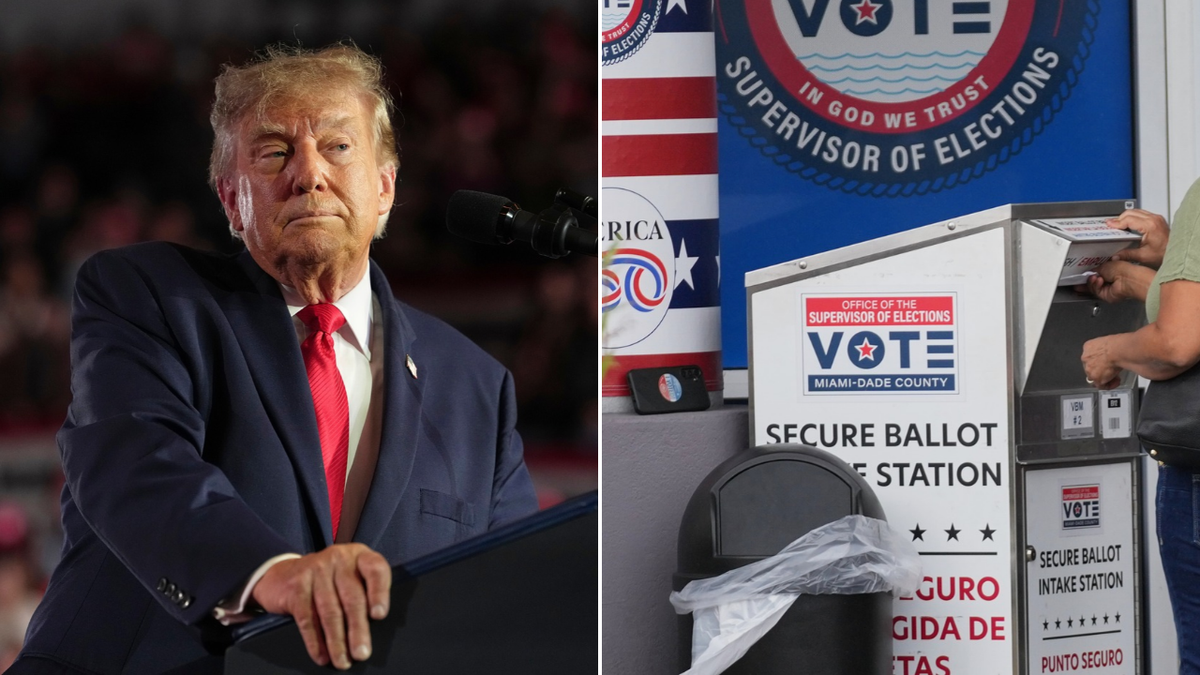
Donald Trump’s second term is facing its first major electoral test as Americans vote in midterm elections that could see Democrats regain control of the House of Representatives and potentially take the Senate.
The state-level contests are being held amid falling support for the president, with his approval rating reported to be as low as 32 per cent days before polling closes on Tuesday, local time.
Trump’s aggressive immigration policies have helped maintain support in Democrat-controlled states, but high inflation, the extended war with Iran and concerns about corruption have fuelled discontent in traditionally Republican territory.
States that have backed Republicans for decades, including those where Trump secured large majorities in the 2024 presidential election, have become unexpectedly competitive. The shift has also affected Republican candidates closely aligned with the president and his political movement.
Democrats are widely expected to win 49 of the 100 Senate seats. They would need to take two of the five remaining contests considered too close to call to secure a majority in the upper chamber.
A Democratic victory in the House would give the party the power to initiate impeachment proceedings against Mr Trump, pass federal legislation and introduce revenue bills. The Senate amends legislation and funding measures, as well as overseeing impeachment trials.
Losing both chambers would significantly restrict the president’s ability to advance his policy agenda. Democrats could also seek to reduce funding for the conflict with Iran and pass legislation aimed at revoking tariffs imposed on countries around the world.
Texas, Michigan and Kansas in focus
Texas is among the states where Republicans are facing an unusually strong challenge. The state has been a Republican stronghold for decades, with its last Democratic senator, Bob Kruger, voted out in 1993.
Democratic candidate James Talarico, a former teacher, Presbyterian seminarian and eighth-generation Texan, has built support by promising to represent the state rather than simply follow the Democratic Party. Almost every poll since August has placed him ahead of Republican Ken Paxton, Texas’s current attorney general.
The latest poll cited in the source material put Mr Talarico seven points ahead, with the support of 50 per cent of eligible voters. Mr Paxton has remained a firm supporter of Trump’s “America First” policies, while also facing controversy over his actions as attorney general, including a deal involving a child abuser that reduced the sentence to 60 days in prison.
Michigan’s Senate contest has also been unsettled. The race is to replace retiring Democratic senator Gary Peters, but the party’s nomination contest ended with Abdul El-Sayed narrowly defeating congressional representative Hayley Stevens.
Mr El-Sayed, a Rhodes Scholar and epidemiologist, is facing Republican Mike Rogers. Ms Stevens had criticised Mr Rogers during her campaign and announced her support for Mr El-Sayed, but switched allegiance on Sunday and backed the Republican instead.
The impact of that decision will not be known until the votes are counted. Mr El-Sayed’s possible victory would also represent a significant moment for Democrats after voters looked beyond comments he made about Israel not being an American ally.
Kansas, another state with a long record of Republican dominance, is also being closely watched. The state has elected only three Democrats to the Senate since 1861, and its last Democratic senator, George McGill, left office in 1939.
Democratic candidate Adam Hamilton has nevertheless gained support among undecided voters, particularly in farming communities affected by rising diesel and fertiliser prices after the Strait of Hormuz was closed by Iran during the war in the Middle East.
Mr Hamilton was reported to hold a lead of more than four points over Republican incumbent Roger Marshall in the final week before the midterms, with some voters saying they would support a Democrat for the first time.
The election is being watched beyond the United States because of its potential economic and international consequences. Australian Treasurer Jim Chalmers said voters in his country were affected by decisions taken in Washington and Tehran.
“In times which are as volatile as these, people will be hanging off every word from the US President,” Mr Chalmers said.
He added: “The difference between us and the Americans is that they have a say when the war ends and we don’t.”
“If it was up to me, from an economic point of view, the war in the Middle East would end today because Australians are the cost-of-living casualties of decisions taken in DC and Tehran.”
