


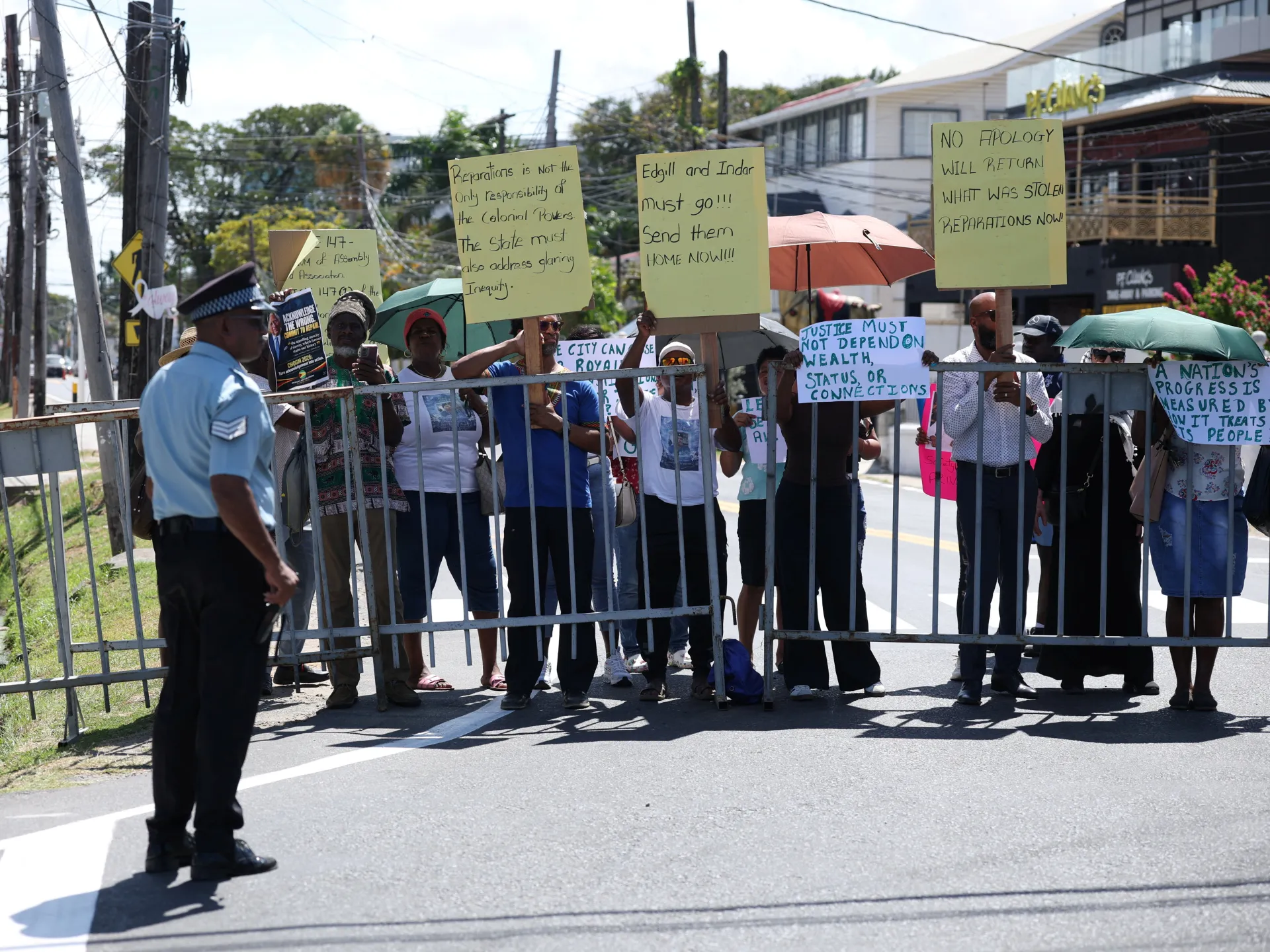
UK Prime Minister Andy Burnham is open to calls for a formal apology for Britain’s role in the transatlantic trafficking of enslaved Africans and chattel slavery, ahead of King Charles III addressing the Commonwealth Heads of Government Meeting in Antigua.
The prospect has been welcomed by campaigners for reparatory justice, who argue that an apology is essential to acknowledging the damage caused by colonialism, enslavement and other forms of oppression.
The Reparations Commission of the Caribbean Community has sought talks with Britain on an apology and reparations for some time. Previous responses have expressed sorrow and regret, but stopped short of offering a formal apology or committing to one.
Calls for action are expected to feature prominently around the Commonwealth meeting, where civil society protests and demands for an apology and reparations have been reported.
Debt cancellation and compensation demanded
Any apology, campaigners argue, would need to be followed by practical measures. They reject the idea that reparations could be limited to improved repayment conditions for poorer countries, as proposed in Burnham’s suggested “drive on debt”.
The Caribbean Community’s Ten Point Plan for Reparatory Justice says an apology would acknowledge the shared history of Europe and the Caribbean, accept responsibility for historical crimes, commit to avoiding their repetition and support efforts to repair the resulting harm.
It also links present-day inequality and racial injustice to the history of slavery, colonisation and the treatment of Africans and their descendants as property.
Britain has previously rejected demands for slavery reparations. In 2015, then-prime minister David Cameron announced a £25 million UK-funded project to help build a prison in Jamaica, intended to facilitate the deportation of Jamaican nationals serving long sentences in British prisons. The proposal prompted controversy.
Sir Arthur Lewis, described as a founding figure in the modern Caribbean reparations movement, argued that Britain had benefited from more than 200 years of unpaid labour by enslaved people in the Caribbean.
In his 1939 book Labour in the West Indies: The Birth of a Workers’ Movement, Lewis wrote: “It is the British who by their action in past centuries are responsible for the presence in these islands of the majority of their inhabitants, whose ancestors as enslaved persons contributed millions to the wealth of Great Britain.”
He described the unpaid labour extracted from millions of enslaved people as “a debt that must be repaid – and which the British have yet to repay”.
Supporters of reparations say Britain has neither acknowledged nor attempted to repay that debt, despite evidence of the benefits it gained from chattel slavery. They are calling instead for debt cancellation and monetary compensation.
The debate also includes competing accounts of abolition. Campaigners say enslaved people, including Chief Takyi in Jamaica and Black revolutionaries in Ayiti, played a leading role in the fight to end slavery, rather than Britain acting alone.
They argue that the legacy of the transatlantic trafficking of enslaved Africans and chattel slavery remains unresolved, and that the passage of time does not remove responsibility for the crimes. The demand now being made is for Britain to apologise formally and begin discussions on reparations.
