


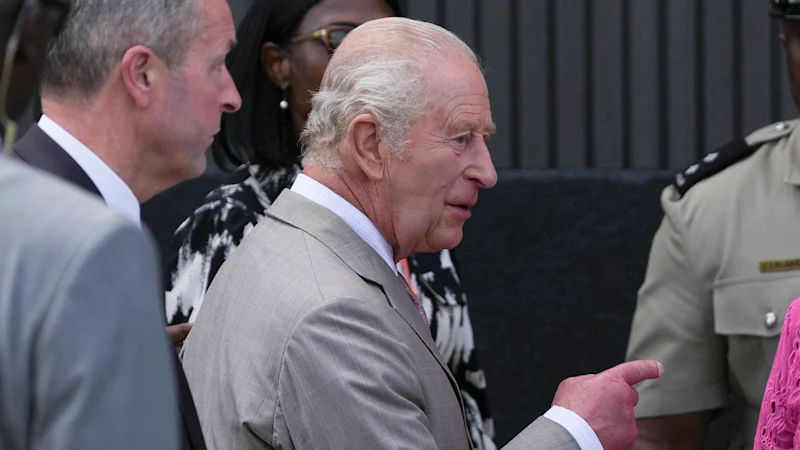
King Charles has expressed “profound personal sorrow” over slavery but stopped short of apologising, as he addressed Commonwealth leaders at the opening of their summit in St John’s, Antigua and Barbuda.
The King described the transatlantic slave trade as a “monstrous injustice” and acknowledged its continuing impact on many of the 56 Commonwealth countries represented at the meeting.
“The transatlantic trade in enslaved persons still casts a shadow over these islands and other members of our Commonwealth,” he said.
“As I have said before, that shameful chapter of history is one that fills my heart with horror and my soul with the most profound personal sorrow.”
His remarks came amid calls from some Commonwealth countries for Britain to pay compensation for slavery and its lasting effects. Gaston Browne, the Prime Minister of Antigua and Barbuda and host of this year’s Commonwealth Heads of Government Meeting, has called for discussions on reparations.
Mr Browne said two days before the summit that slavery had “not disappeared with the passage of time” because of its continuing impact on societies.
King Charles also highlighted Britain’s role in ending the trade, saying the Royal Navy had played a leading part in the campaign to abolish it in the 1800s.
“We cannot change the actions of those who came before us. We can, however, learn from the past,” he said.
“And yet, history also teaches us that evil need not have the last word; that character and courage can combine to overcome the most monstrous injustice, as they did with the determination to end international trade in enslaved people, in which the Royal Navy played such a leading role.”
The address was delivered in front of leaders including Australia’s Prime Minister Anthony Albanese, Andy Burnham of the UK and Canada’s Mark Carney, alongside representatives from across the Caribbean, Africa and the Pacific.
The gathering is the first Commonwealth summit since the 2024 meeting in Samoa, which was also marked by debate over slavery and the forced removal of workers from Pacific islands, known as “blackbirding”.
The King used the opening session to warn about technologies being released at “dizzying speed” and urged the Commonwealth to confront the changes they would bring.
