


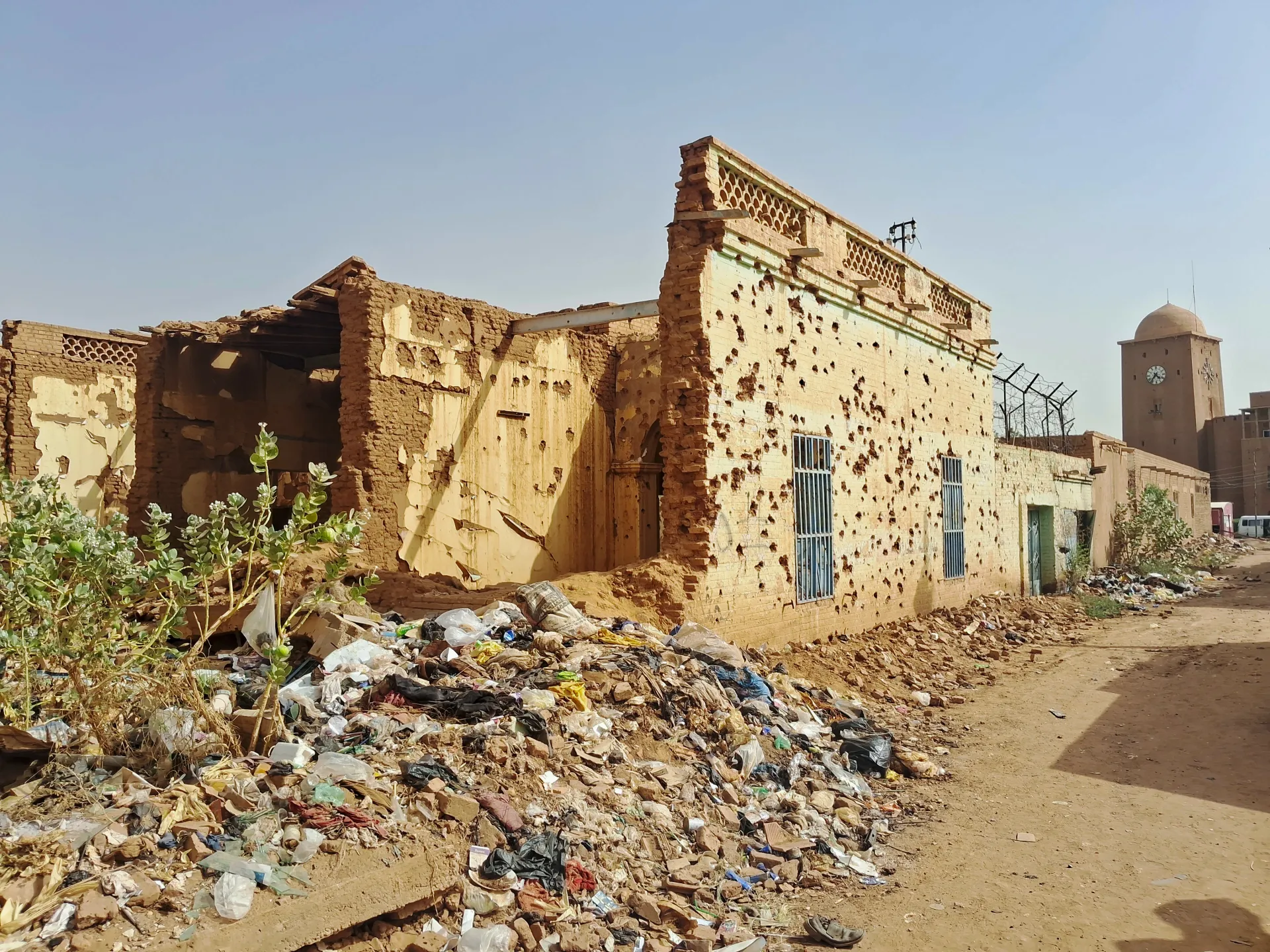
Sudan’s displaced returnees are finding little relief after going back to homes damaged by war, with many facing destroyed property, unaffordable repairs and inadequate basic services in and around Khartoum.
Mohamed Mahdi Makki Farah, 51, returned to Jabal Awliya, south of the capital, in August 2025 after the Sudanese Armed Forces declared Khartoum state free of Rapid Support Forces fighters. His house had been ransacked and stripped of household belongings.
“Everything had been completely destroyed. Now we sleep on the floor, and some of us are living in rented houses,” he said. “We have not made any decision to repair our home because the costs are extremely high, and we have not been able to start.”
Makki Farah had left for El-Fasher in North Darfur in June 2023, shortly after fighting between the Sudanese Armed Forces and the RSF began. The years away, the cost of returning and his children’s medical expenses have depleted the family’s resources.
His trading business has also suffered. His possessions were lost and the value of his capital has fallen to almost a third of its pre-war level because of the depreciation of the Sudanese pound.
The family is struggling to secure water, electricity and healthcare, while important documents lost during the conflict have had to be replaced.
“Everyone knows about the water and electricity problems; Khartoum is almost entirely in darkness now. As for healthcare, only government health centres are operating, thank God,” Makki Farah said.
Return to Khartoum brings new hardship
The experience is being repeated by families returning to areas where fighting has eased. Although conflict continues, particularly in south-eastern Sudan, government gains around Khartoum have allowed large numbers of displaced people to go back.
About 5.27 million displaced Sudanese had returned to their homes in nine states by September 30, according to the International Organization for Migration’s displacement tracking figures. Some 82 per cent had been internally displaced and 18 per cent had crossed international borders, while children made up about half of all returnees.
An assessment by the United Nations High Commissioner for Refugees estimated that around 2.5 million people had returned to Khartoum state by August 2026. The agency warned that returning did not guarantee safe or suitable conditions for rebuilding lives.
Many returnees have found their properties damaged or uninhabitable, with limited work and poor access to water and other essential services. Some continue to rent because they cannot afford the repairs required to make their homes liveable.
Abubakr Ishaq Hamed Ibrahim, 40, went back to Khartoum in February 2026 after being displaced to River Nile state in May 2023. His home had been looted and destroyed, with furniture, bedding and other household possessions gone.
He and his family moved to a rented property in Omdurman’s al-Thawra neighbourhood, but struggled to pay without a regular income.
“Our homes were looted and destroyed. We found nothing inside. Everything was wrecked, and we had no furniture, no bedding, nothing at all,” he said. “We were unable to pay the rent for several months, and rents are quite expensive. We have been through extremely difficult conditions, and even now we have no stable source of income.”
Hamed Ibrahim previously relied on self-employed work and now takes whatever casual jobs are available. His family has used its savings and borrowed from relatives and friends to pay for food, housing and school fees.
“Thank God, we are now doing casual jobs. The income is not enough to meet the cost of living and the daily burdens. We have exhausted all the money and savings we had, and we have borrowed money from individuals,” he said.
His children have returned to school with help from relatives, while the family receives food assistance including sorghum, flour, wheat, oil and sugar.
For many residents, however, daily life in Khartoum remains difficult. Fuel shortages and power cuts have disrupted public transport, fares have risen on some routes and commuters can wait for hours for buses. In some areas, shortages of flour have also led to long queues outside bakeries.
Khartoum state authorities have agreed measures including supplying fuel to public transport and giving buses priority. Government departments have also been instructed to offer lifts to staff travelling to and from work.
Economic journalist Khalid Takes said the crisis showed the need for greater state involvement in public transport rather than continued reliance on private minibuses.
“No country has left the public transport sector entirely in the hands of the private sector, which relies on small vehicles,” he said. “This results in ongoing costs for the state, both directly and indirectly, particularly in importing spare parts and fuel, which require foreign currency.”
Makki Farah said returning to Khartoum had not restored the life his family had before the war.
“We have lost everything we had before the war. Now we need assistance because everything we need – housing, healthcare and education – has been destroyed,” he said.
