


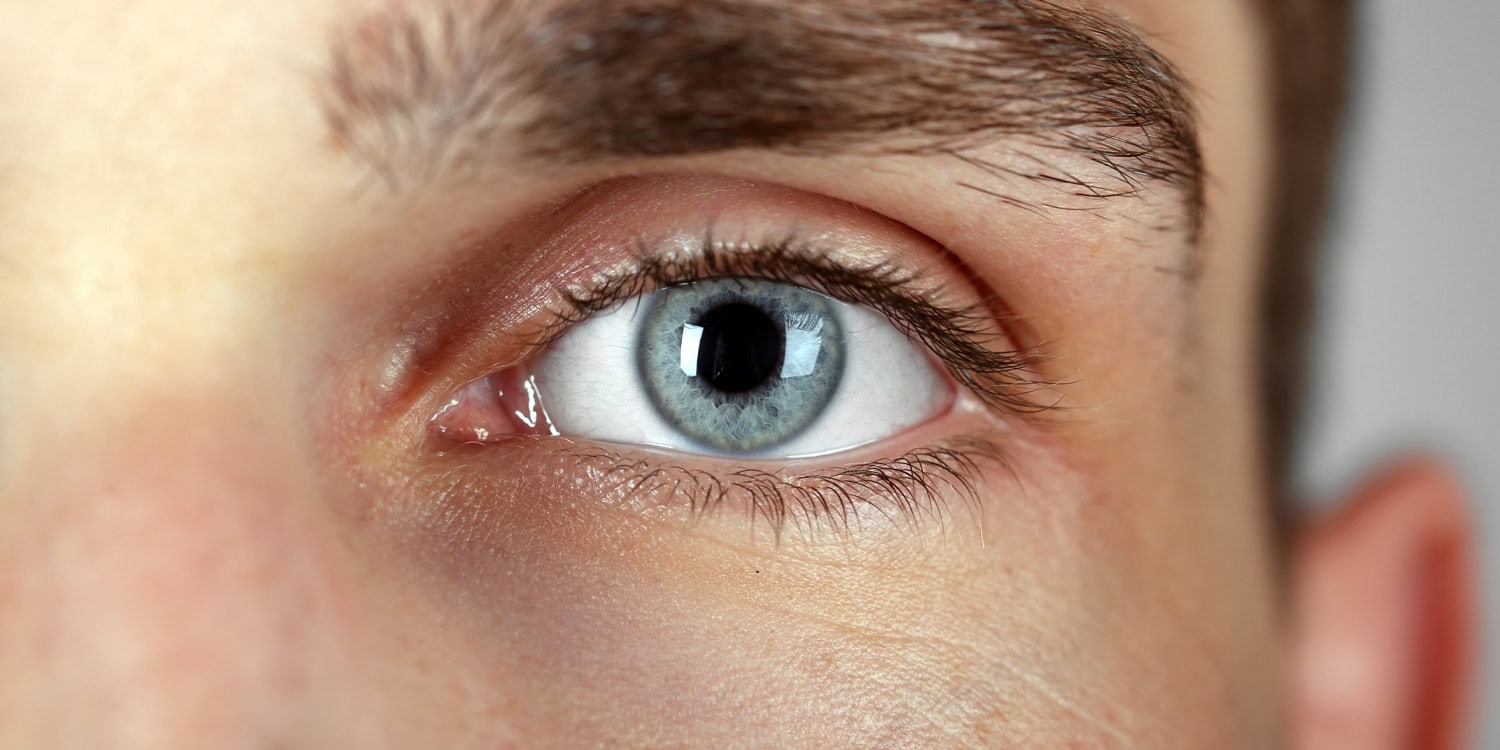
A new small study published in Psychological Science suggests that tiny reflections of light on the surface of the eye, known as eye glints, help observers track where someone is looking, even as lighting and head positions change.
Gaze direction is central to social interaction. People typically determine where someone is looking by the contrast between the dark iris and the white of the eye, but shadows or a turning head can distort perception and mislead viewers.
Researchers Gwenisha J. Liaw and Colin J. Palmer, of the National University of Singapore, investigated whether the brain uses eye glint as a natural corrective cue in gaze perception. Eye glint refers to small, mirror-like highlights created by the cornea and the eye’s moist surface.
Three experiments used computer-generated three-dimensional faces to test whether eye glint aids gaze tracking. In the first study, 40 participants viewed front-facing faces lit directly and eye contact was manipulated. Half the faces displayed realistic eye glints, while the other half had the glints digitally removed, with all other features unchanged. Participants completed two tasks: judging whether the face was making eye contact and, using a computer mouse, rotating a pointer to indicate the exact gaze angle.
Under these straightforward viewing conditions, eye glint had almost no effect on judgments. The differences in accuracy and precision between faces with and without glint were not statistically significant.
In the second study, the viewing conditions were made more challenging by turning the faces’ heads by about 20 degrees. When eye glint was present, participants made fewer perceptual errors caused by head rotation, and their gaze estimates were more precise than in the glint-absent trials. The researchers noted that the glint’s position on the iris remains relatively stable despite head turning, providing a reliable reference point for estimating true gaze direction.
The third study examined lighting changes. Faces were illuminated from a 45-degree angle to either the left or the right. As before, participants compared faces with and without eye glints, indicating whether the faces appeared to make eye contact. Eye glints reduced the visual bias introduced by side lighting, helping to correct the perceived orientation of the eye.
The position of the glint on the eye shifts with lighting, and the brain appears to use this tiny reflection to deduce the lighting direction and compensate for shadows. About half of participants reported noticing the eye glints, but there was no difference in performance between those who noticed and those who did not, suggesting the effect operates automatically rather than being dependent on conscious awareness.
A potential limitation is that real-world lighting is highly variable, and moving through a room could continually shift reflections. The researchers note that eye movements are very rapid and that lighting often remains fixed for the duration of a single glance, which may allow the glint cue to be used effectively in practice.
Looking ahead, the team plans to explore whether eye glint influences other social judgments, such as emotion recognition or age estimation, and whether people could be trained to consciously utilise glint cues in natural settings.
The study, Eye glint as a novel Perceptual Cue in human vision, was authored by Gwenisha J. Liaw and Colin J. Palmer.
