


US midterm redistricting is being put to the test in Texas, where a Republican-backed map has reshaped Houston’s congressional seats and weakened the political influence of a predominantly Black community.
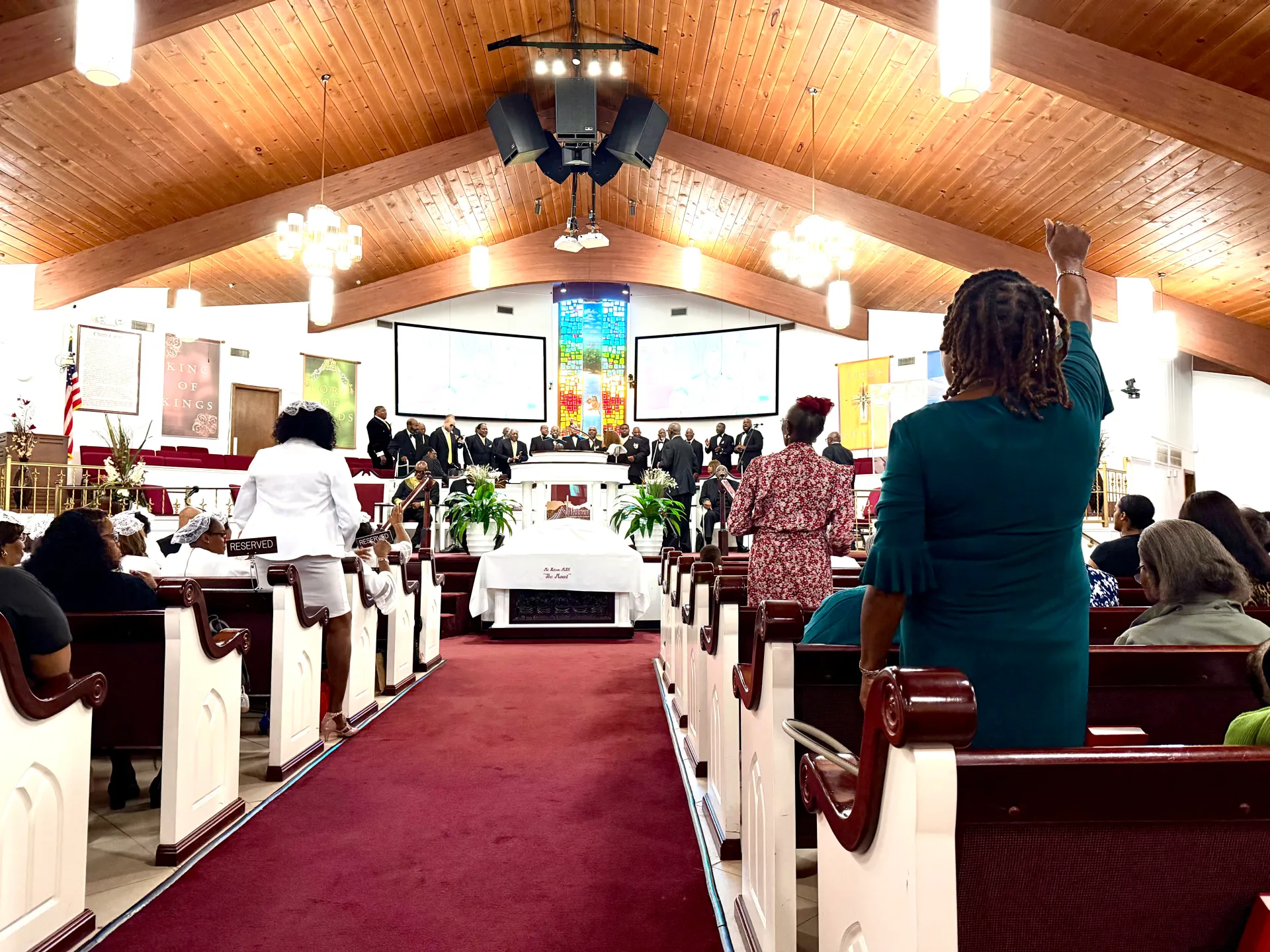
At Mount Hebron Missionary Baptist Church in Sunnyside, worshippers have watched their neighbourhood move out of the district represented for two decades by Democrat Al Green. The change followed a rare mid-decade redrawing of Texas’s congressional boundaries after an appeal from Donald Trump.
The church and surrounding Black community were placed in the Black-majority 18th District, while the 9th District was redrawn to favour Republicans. Green was consequently forced into a primary contest against Christian Menefee, another Black Democrat who already represented the 18th, and lost.
The result was that Houston lost one of its Black members of Congress. Critics have described the changes as “cracking and packing”, arguing that they reduce minority representation by concentrating heavily Democratic Black voters in fewer districts.
Pastor Max Miller, who has served Mount Hebron for 18 years, said the dispute over district boundaries was inseparable from the wider struggle for civil rights.
“They are trying to manipulate and monopolise the vote and minimise the people who are in those districts,” he said. “We see so much rolling backwards that it looks like they’re trying to take a script from an old song and turn back the hands of time.”
Alice Jefferson, a 97-year-old voter who had followed Green’s political career, said she opposed the redistricting because the congressman had been moved out of the area.
“He always had good advice for the people,” she said.
Janice Ray, a 61-year-old home health aide and entrepreneur, said lawmakers were “trying to move people out of the district that they’re familiar with”. She added: “But we’ll stand firm, regardless of what they try to do. Because just like it was changed, it can always be changed back.”
Redistricting reshapes minority representation
Michael Adams, a professor at Texas Southern University, said the loss of an additional Black representative could leave some voters feeling that their political voice had been diminished.
“In terms of descriptive representation, minorities and others feel that if they can elect someone who reflects their values, for example, and who may look like them, their voting can be defined as one voice,” he said.
Texas has been at the centre of a broader national redistricting drive. Republican-led changes were carried out in Missouri, North Carolina, Tennessee, Louisiana, Alabama, Florida and Ohio, while Democrats redrew California’s map. A court-ordered map in Utah favoured Democrats, while a Democratic effort in Virginia was later invalidated.
Such mid-decade changes, made outside the usual census cycle, were already unusual. Critics say several of the maps would previously have been considered unlawful, particularly where they diluted minority voting power.
The US Supreme Court ruled in April that challengers to such a map must prove “racist intent”, a standard critics say is too demanding and could permit racial gerrymandering. Opponents of Section 2 of the Voting Rights Act, meanwhile, argue that drawing districts to preserve minority voting power is itself discriminatory.
Texas Republicans have denied that the map amounts to racial gerrymandering. State Representative Todd Hunter said it reflected political considerations, public testimony, population growth and changing voting patterns, adding that the revised districts gave Republicans an opportunity to win them.
A test of Republican gains
The Republican strategy is not guaranteed to deliver the gains its architects expect. The party had hoped to secure at least 13 additional seats nationally after the competing rounds of redistricting, but polling has indicated that the increase could be considerably smaller.
In Texas, much of the Republican map was based on recent Latino voting trends. Republicans are seeking to capture the 9th District in Houston and four other seats, mainly in South Texas, as they attempt to build on Donald Trump’s support among Latino voters in the state in 2024.
Brandon Rottinghaus, a professor at the University of Houston, said the outcome would show whether dissatisfaction with the political climate could overcome a strongly partisan map.
“Redistricting can change the political boundaries, but it can’t guarantee how voters will behave,” he said.
The 9th District is now regarded as Republican-favoured, but its large population of Latino voters who rarely turn out has given Democrats a possible route to victory. Dayana Iza, Texas state director of the Latino voting organisation Mi Familia Vota, said the group had concentrated on increasing participation.
“The Latino percentage in that district that votes is very, very low,” she said. “So that then became a district that we are trying to mobilise in terms of turnout.”
Democratic candidate Leticia Gutierrez and state senator Molly Cook spent the final days before the vote knocking on doors in eastern Houston. Gutierrez said personal contact could help reach voters who felt ignored and were more concerned with the cost of living than party politics.
“At this point, it’s not a left or a right thing anymore. This is an affordability crisis,” she said.
Some residents remain disengaged. Christian Garcia, a 53-year-old chemical plant worker who moved to Texas from Puerto Rico in 2014, said he had not voted since arriving and no longer believed in politicians.
Others, including teacher Esmeralda Gil, said affordable healthcare and housing were among their main concerns. The response of voters such as these will determine whether the redrawn boundaries produce the Republican gains anticipated by the Texas legislature.
