


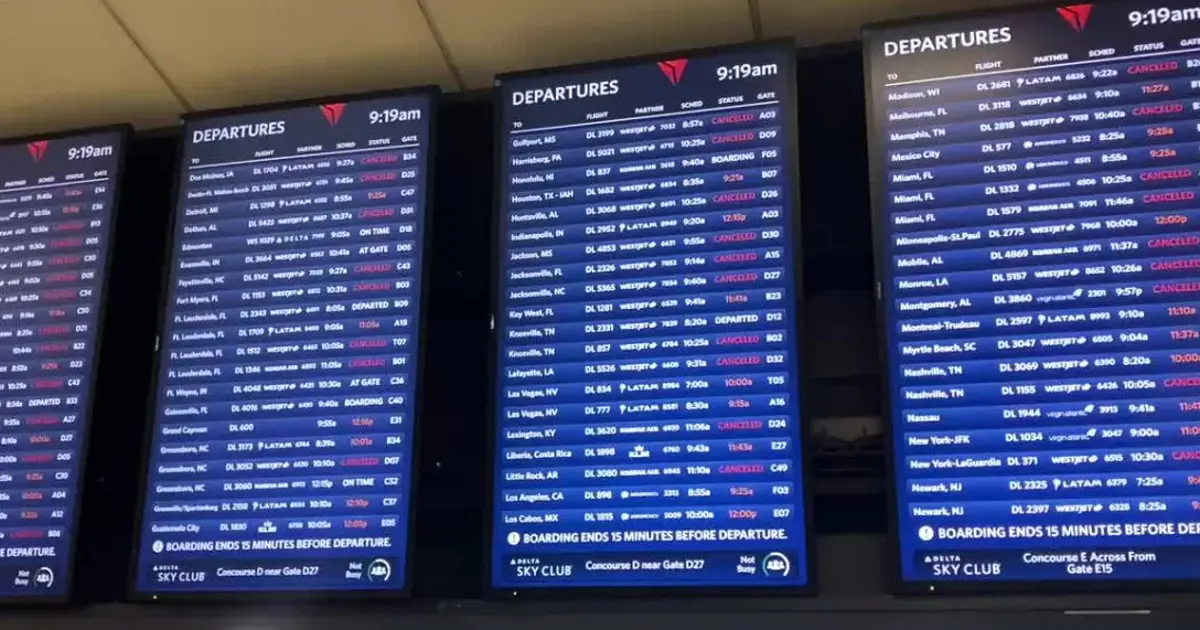
Passengers caught up in an FAA ground stop should resist the temptation to cancel their own flight, as doing so could jeopardise their right to a full cash refund.
Under US Department of Transportation rules, travellers are entitled to their money back when an airline cancels a service or makes a significant change, provided they do not accept an alternative flight, travel credit or voucher. The reason for the disruption does not matter, meaning the protection can apply during severe weather, air traffic control failures, security incidents and other government-ordered stoppages.
However, passengers who cancel before the airline has officially cancelled or significantly altered the booking may be treated as having made a voluntary decision not to travel. That can leave them subject to the fare’s cancellation terms rather than the automatic refund rules.
FAA ground stop passengers can reject rebooking
A significant delay is generally defined by the Department of Transportation as at least three hours for a domestic itinerary or six hours for an international journey. Airlines must tell eligible passengers about their refund rights and cannot replace a cash refund with a voucher unless the traveller actively chooses that option.
Refunds must normally be sent to the original form of payment within seven business days for credit-card purchases. Payments made by cash or cheque must be returned within 20 calendar days.
Travellers who still want to reach their destination can usually ask to be moved to the next available flight without paying more. But federal law does not generally require airlines to provide hotel accommodation, meals or a seat on a rival carrier when the disruption is outside the airline’s control.
That includes many FAA ground stops, severe weather events, air traffic control outages, security threats and certain emergencies. The US transportation department’s airline service dashboard records voluntary commitments made by individual carriers, but those benefits vary between airlines and are generally linked to disruptions within the airline’s control.
For controllable problems, such as some computer failures or crew-scheduling issues, major airlines have committed to measures including meals, overnight accommodation and, in some cases, rebooking on a partner airline. Passengers should check the policy of the carrier operating their flight rather than assume the same assistance applies across the industry.
Refunds can also cover extras that were paid for but not provided, including seat selection and onboard Wi-Fi. Checked-baggage fees may be refundable when luggage is delayed beyond the relevant domestic or international time limits.
If a passenger willingly accepts a voucher instead of a refund during a qualifying disruption, the voucher must remain valid for at least five years, provided the offer meets the federal requirements.
Passengers already on board an aircraft have separate protections during a tarmac delay. Airlines generally cannot keep people on a domestic aircraft for more than three hours, or an international aircraft for more than four, without giving them the opportunity to return to the gate and leave the plane.
There are exceptions where the pilot considers it unsafe or security-sensitive, or air traffic control says that returning to the terminal would significantly disrupt airport operations. After two hours, airlines must provide food, drinking water, working lavatories and medical assistance where necessary.
Travellers facing an overnight wait should also examine the insurance attached to the credit card used to buy the ticket. Some policies cover hotels, meals and ground transport after a delay lasting between six and 12 hours, even when the cause is weather or an FAA ground stop.
Keeping receipts, booking confirmations and screenshots showing the flight status, length of the delay and stated reason for the disruption can help with an insurance claim or complaint to the transportation department.
