


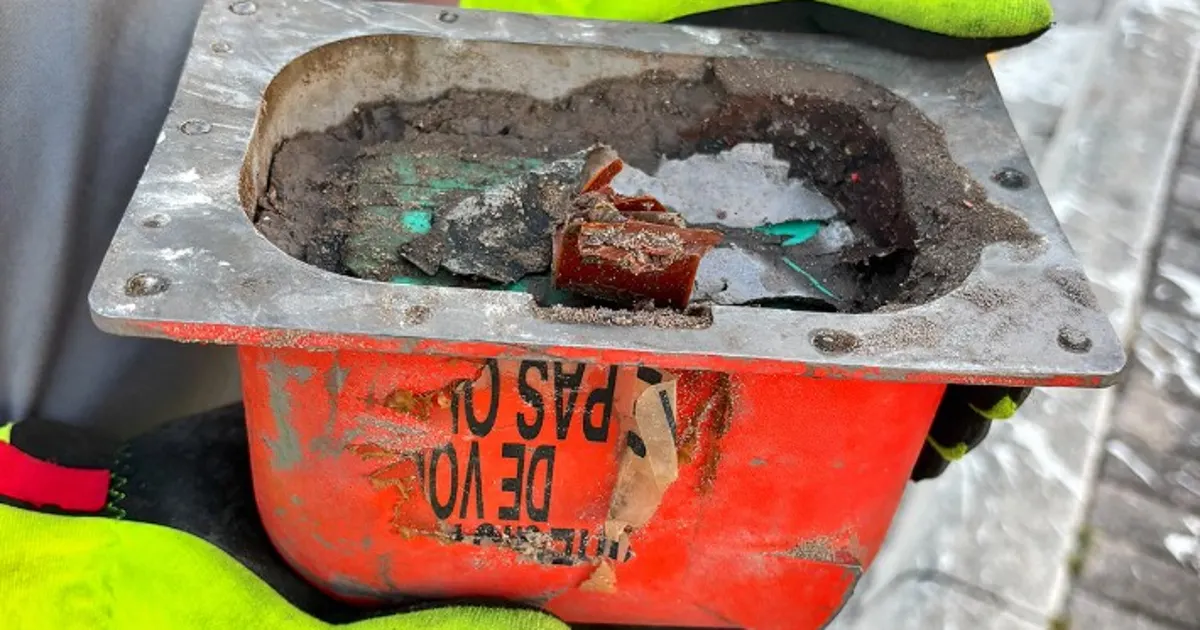
Investigators have recovered the cockpit voice recorder from the Learjet 60 that crashed near Greenacres, Florida, killing all nine people aboard.
The National Transportation Safety Board (NTSB) said the device was found at the site of the initial impact on 1 November. It has been taken to the board’s Vehicle Recorders Laboratory in Washington DC for evaluation.
Analysis of the recorder could help establish what happened in the final moments of the Bahamas-bound flight, including the crew’s response to severe turbulence and icing reported in the area.
The NTSB has not said whether the device was damaged in the crash or whether it was functioning before the aircraft went down. Any recoverable cockpit conversations or sounds could provide investigators with further evidence as they examine the cause of the disaster.
Investigation into Learjet crash remains ongoing
The excavation of the impact site has now been completed, the NTSB said. Investigators have also recovered parts of both engines, sections of the wings, the flight deck and components from the aircraft’s tail.
A portion of the left elevator, which controls the aircraft’s pitch, was found in three pieces between 1.3 miles and 3.8 miles from the main crash site. The discovery indicated that the Learjet may have begun breaking apart before it struck the ground, although officials have not determined whether the damage caused the loss of control or resulted from the aircraft’s descent.
The Learjet left Austin-Bergstrom International Airport at about 10.37am on 1 November, bound for North Eleuthera in the Bahamas. It crashed in Palm Beach County shortly before 1pm, killing the two crew members and seven passengers.
Those killed included Austin technology entrepreneur Adam Robinson, his wife Helen Sharp, their two young children, Emma and Charlie, their nanny Anita Maria Cetina, and friends Rachael Reed and Charmi Fehr.
Air traffic control records show that the crew encountered worsening weather during the flight. The co-pilot reported icing and turbulence, with the aircraft being thrown up and down by more than 700ft, and asked whether there was a better route through the storm system.
The NTSB has said weather will be a major focus of its investigation. The agency is continuing to examine the recovered wreckage, flight records, air traffic communications and other evidence before reaching any conclusion about what caused the crash.
