


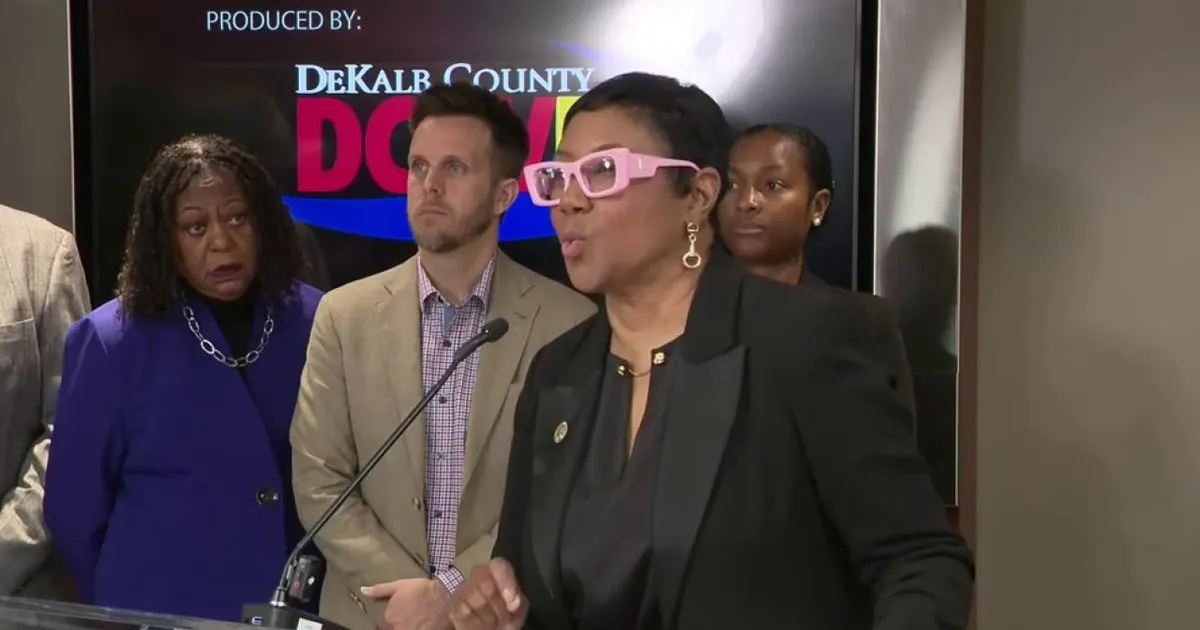
DeKalb County’s chief executive, Lorraine Cochran-Johnson, has said people will not be arrested simply because they are homeless, as officials set out the county’s response to homelessness and its newly approved urban camping ordinance.
Speaking at a news conference on Monday, Cochran-Johnson said DeKalb County had to protect public safety and keep public spaces accessible while ensuring people without housing were treated with dignity.
“We will leave no resident behind,” she said, adding that losing a home did not mean losing a person’s dignity. Homelessness alone, she said, was not grounds for arrest in DeKalb County.
The comments came after county commissioners approved the urban camping ordinance by five votes to two on October 27. The measure addresses conduct affecting public safety, access to public areas and obstruction of public infrastructure.
Cochran-Johnson has proposed a 120-day preparation period before the ordinance is implemented, allowing public safety agencies, outreach teams and service providers to coordinate shelter, behavioural health support and housing assistance.
A county policy adopted in January states that homelessness and poverty, in themselves, should not be treated as criminal conduct. Officers may still intervene where criminal activity takes place or public safety is at risk.
The county says its approach must also comply with Georgia Senate Bill 62, which covers public camping, sleeping and obstruction of pavements. The law allows local authorities to provide services and diversion programmes instead of issuing citations or making arrests.
DeKalb officials also highlighted a 400-bed emergency shelter, an $8 million housing project for single mothers and children, and a South DeKalb day centre that had served 1,070 people by the end of August.
Further proposals include a second day centre in North DeKalb and a Safe Space DeKalb initiative offering secure overnight parking and support services for people living in vehicles.
Cochran-Johnson said the county’s response must recognise both the need for safe, accessible public spaces and the need to provide compassion, shelter and routes towards stable housing.
