


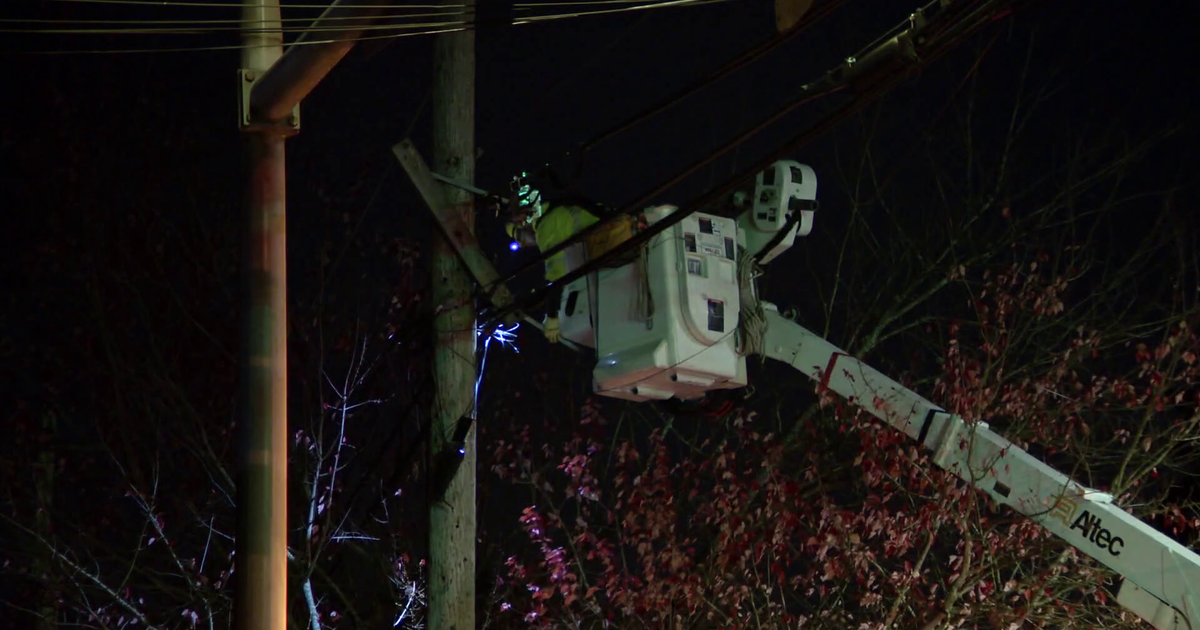
Seattle City Light has placed standby crews on round-the-clock duty as heavy rain and gusty winds move into the region, with teams preparing to respond to power cuts across the city.
The utility’s storm operation is being coordinated from its South Service Centre, where warehouse staff are ensuring engineers have the equipment needed to deal with fallen branches, damaged power lines and transformer failures.
Seattle City Light prepares for outages
Behind the response is an inventory containing hundreds of essential components, including insulator brackets, thousands of transformers and miles of overhead and underground cable.
Theresa Provido, the warehouse supervisor, said the aim was to make sure field crews could collect materials and leave for an incident without delay.
“A lot of people don’t see the background of what happens in operations,” she said. “You may see trucks out there, which they do an incredible job of being out there in all weather conditions. But in the background, for my crew, we provide the material that they need to restore power within the city.”
The facility also stores 8,000lb spools of insulated underground cable, used to supply electricity to downtown Seattle and its high-rise buildings.
Seattle City Light says its outage map is updated every five minutes, although restoration estimates may change as crews assess the cause and extent of damage. ([seattle.gov](https://seattle.gov/city-light/outages?utm_source=openai))
How power is restored after a storm
When an outage is reported, the utility’s System Control Centre assesses its priority before sending a two-person line service team to inspect the scene.
If the damage involves a blown transformer fuse or requires heavier machinery, a duty supervisor can send additional crews and equipment.
The first focus is the feeder system: the high-voltage lines that carry electricity towards neighbourhoods. Strong winds can bring branches down on these lines, forcing crews to clear debris, replace crossarms or install new poles.
Once the main feeders are operating again, engineers move on to the distribution network and service wires that carry electricity into homes and businesses.
Jonathan McCamey, a field operations supervisor, said safety determined how quickly repairs could be completed.
“When we’re out working, we want to be safe. We want to make the public safe,” he said. “So, we have to work in a particular manner in order to keep our crews safe. We don’t want to put them in harm’s way and not be able to complete the mission.”
Seattle City Light’s published restoration guidance says crews will not endanger personnel for the sake of speed and may need specialist teams or several separate repairs before a major outage is fully resolved. ([itservicehub.seattle.gov](https://itservicehub.seattle.gov/city-light/outages/power-restoration?utm_source=openai))
Equipment is sorted after repairs
The work continues after electricity has been restored. Crews return damaged or salvaged equipment to the service centre, where it is separated by material, including brass, aluminium, steel and copper.
Staff then determine what can be reused, refurbished or recycled.
Standby teams are scheduled to remain at the site through the weekend and will be ready to deploy as soon as new calls for assistance arrive.
Residents can report an outage to Seattle City Light on 206-684-3000. Anyone who sees a fallen power line should stay at least 30 feet away and call 911. ([seattle.gov](https://seattle.gov/city-light/outages?utm_source=openai))
